

In practical applications, the advantages of irregularly shaped copper busbars lie in their stability and adaptability. For example, in high-temperature industrial environments, their softening temperature is much higher than that of conventional copper, making them less prone to poor contact due to thermal expansion. In coastal or humid environments, their corrosion resistance reduces the decline in conductivity caused by oxidation.
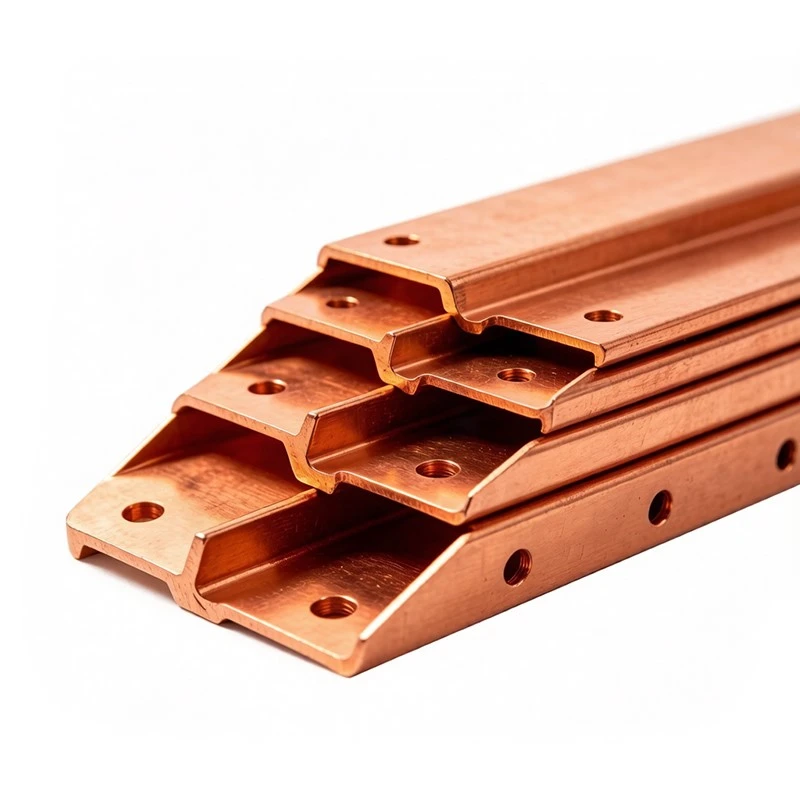
When selecting a busbar, it is crucial to focus on parameters such as copper content, hardness, and softening temperature to ensure that the material properties match the application scenario. Furthermore, customized shapes can be chosen based on the installation space to optimize space utilization.