

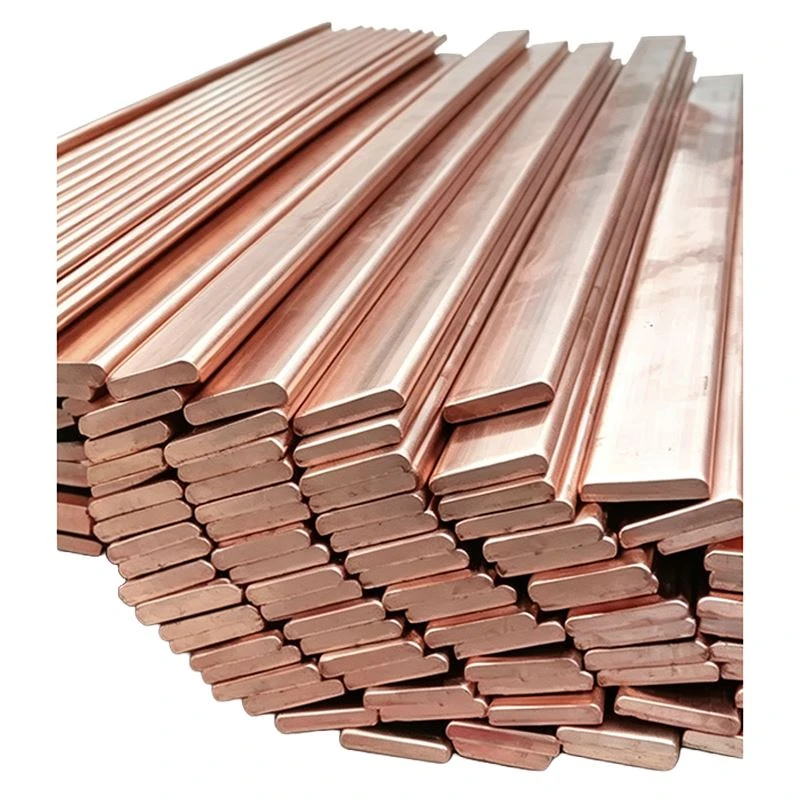
Low Internal Stress for Long-Term Stability
Our electrical copper busbar focuses on two critical performance factors. One is conductivity efficiency. The other is long-term stability. Both matter for reliable electrical connections. Our processing team maintains both through specific production parameters. They pay special attention to internal stress control during extrusion and cutting. This is where many busbars fail. Internal stress causes gradual deformation over months or years. A busbar that looks straight when shipped can bow slowly after installation. This affects connection reliability. Our workers use cooling routines and proper straightening methods to reduce stress. These steps come from understanding how busbars behave over time.
Stress Control and Material Conditioning
We apply specific cooling rates after extrusion. Rapid cooling can trap stress. Slow cooling reduces stress but takes longer. Our team has found the optimal cooling profile. The straightening process also matters. Aggressive straightening can introduce new stress. Our equipment applies gentle, consistent pressure. This straightens the bar without creating new stress. We also perform stress relief on some orders. Customers who need maximum stability request this step. The process involves controlled heating and cooling. This relaxes the internal structure. The busbar then stays stable even under load. We have documented these processes over many years.
Size Range and Material Data
Stock covers all mainstream sizes. Thickness ranges from 2.7mm to 12mm. Width ranges from 15mm to 125mm. Stocked sizes include 12×120, 12×100, 10×125, 8×80, 6×60, 5×40, 4×30, and 3×25. The "L" prefix means an L-shaped bend. Standard length is 6000mm. Custom lengths available. Production follows GB/T5585.1-2026. Copper purity reaches Cu≥99.90%. Total impurities stay below 0.10%. Conductivity is ≥97.3% IACS. Resistivity at 20°C stays ≤0.0177 Ω·mm²/m. Density is 8.9 g/cm³. Tensile strength ranges from 220 to 260 MPa. Yield strength exceeds 170 MPa. Hardness is 65 to 90 HV. Elongation is 17% or higher.
Where Stability Matters Most
Electrical copper busbar goes into critical power equipment. Distribution cabinets rely on stable busbars for safe operation. Switchgear connections must hold their position. Control cabinets also need dimensionally stable conductors. Our customers include utilities and industrial plants. They choose our busbar because it performs consistently over time. The low internal stress reduces maintenance issues. Connections stay tight longer. This saves time and money. The export market has grown steadily for this product. International customers recognize the value of dimensional stability. We ship to panel builders worldwide.
Production and Order Information
We run our CNC programs to maintain uniform dimensions. Batch-to-batch consistency is excellent. Before shipping, we inspect the surface condition. Third-party inspection is welcome. Our raw material inventory stays full year-round. Standard products ship within one week. Custom orders take one to two weeks. The minimum order is 1000 kilograms. Mixed specifications are allowed. We accept USD, EUR, and CNY. Our team works efficiently to meet customer deadlines. The production line runs on a steady schedule.
Technical Parameters
|
Parameter |
Value |
|
Material Grade |
T2 Copper |
|
Copper Purity |
Cu≥99.90% |
|
Standard |
GB/T5585.1-2026 |
|
Electrical Conductivity |
≥97.3% IACS |
|
Resistivity (20°C) |
≤0.0177 Ω·mm²/m |
|
Density |
8.9 g/cm³ |
|
Tensile Strength |
220–260 MPa |
|
Yield Strength |
≥170 MPa |
|
Hardness |
65–90 HV |
|
Elongation |
≥17% |
|
Standard Length |
6000mm (cut to size) |
Hot Tags: electrical copper bus bar, China electrical copper bus bar manufacturers, suppliers, factory


