

Continuous cast copper rod is a game - changer in the telecommunications industry, and as a supplier of this amazing product, I've seen firsthand how it shapes modern communication networks. In this blog, I'm gonna break down the multiple roles of continuous cast copper rod in the telecommunications world.
1. The Backbone of Electrical Conductivity
One of the primary roles of continuous cast copper rod in telecommunications is to serve as an excellent conductor of electricity. Copper is well - known for its high electrical conductivity. Among metals, only silver is better, but the high cost of silver makes copper the top choice for most applications in the telecommunications field.
When we use copper rod for electrical transmission, it allows signals to travel quickly and efficiently. For example, in local area networks (LANs) and wide - area networks (WANs), copper cables made from continuous cast copper rod are used to transmit data packets. These packets contain all kinds of information, from simple text messages to high - definition video streams. The low resistance of copper ensures that the electrical signals don't lose much energy during transmission. This means less distortion and a clearer signal at the receiving end.
Take the Oxygen Free Copper Wire Rod [/copper - wire - rod/oxygen - free - copper - wire - rod.html] as an example. It has even higher conductivity because of the reduced oxygen content. In telecommunications equipment, this type of copper rod can be used in high - speed data transmission lines, such as those found in data centers. Data centers handle a massive amount of information every day, and the use of high - quality copper rods helps ensure that the servers can communicate with each other and with the outside world without any significant signal loss.
2. Structural Integrity
Continuous cast copper rod is also crucial for providing structural support in telecommunications infrastructure. Copper rods are used to make the frames and supports for various communication devices. For instance, in cell phone towers, copper rods are part of the internal structure. They are strong enough to withstand the weight of the antennas, cables, and other equipment mounted on the tower.
Moreover, the malleability of copper allows it to be easily shaped into different forms. This means that copper rods can be customized to fit the specific design requirements of telecommunications equipment. Whether it's a small base station or a large - scale satellite communication dish, copper rods can be bent, cut, and welded to create the necessary structural components.
In fiber - optic communication, although the main medium for signal transmission is the fiber, copper is still essential for powering the associated equipment. Copper rods are used in the power supply systems, providing a stable structure for the electrical connections. This ensures that the fiber - optic terminals, amplifiers, and switches can operate smoothly without any disruption due to structural failures.
3. Grounding and Shielding
In the telecommunications industry, protecting equipment from electrical interference and lightning strikes is of utmost importance. Continuous cast copper rod plays a vital role in grounding and shielding.
Copper rods are commonly used as grounding electrodes. They are buried deep into the ground near telecommunications facilities. When there's a sudden electrical surge, such as a lightning strike or a short - circuit, the copper rod provides a low - resistance path for the electrical current to flow safely into the ground. This protects the sensitive telecommunications equipment from damage.
At the same time, copper is an excellent material for shielding cables. In a crowded telecommunications environment, multiple cables are running side by side, and there's a risk of electromagnetic interference (EMI). Copper shielding, which can be made from continuous cast copper rod, wraps around the cables to block external electromagnetic fields. This reduces the noise and interference in the signal, ensuring that the data transmitted through the cables remains accurate.
The Continuous Cast Copper Wire Rod [/copper - wire - rod/continuous - cast - copper - wire - rod.html] is often used in these grounding and shielding applications. Its consistent quality and reliable performance make it an ideal choice to protect telecommunications systems from various electrical hazards.
4. Enabling High - Frequency Transmission
With the rapid development of telecommunications, the demand for high - frequency transmission is increasing. Continuous cast copper rod can meet this requirement.
In modern wireless communication systems, such as 5G networks, high - frequency signals are used to transmit large amounts of data at high speeds. Copper cables made from continuous cast copper rod have the ability to support these high - frequency signals. The smooth surface and uniform structure of the copper rod reduce the signal attenuation at high frequencies.
In addition, copper has good skin - effect properties at high frequencies. The skin effect means that the electrical current tends to flow on the outer surface of the conductor. In the case of copper rods, this property allows for more efficient transmission of high - frequency signals. The Etp Copper Wire Rod for Cable [/copper - wire - rod/etp - copper - wire - rod - for - cable.html] is specifically designed to enhance the performance of high - frequency cables, which are essential for the next - generation telecommunications technologies.
5. Cost - Effectiveness
For businesses in the telecommunications industry, cost - effectiveness is always a key consideration. Continuous cast copper rod offers a great balance between cost and performance.
Compared to other conductive materials like gold or platinum, copper is much more affordable. At the same time, it provides excellent electrical and mechanical properties. This means that telecommunications companies can build and expand their networks without breaking the bank.
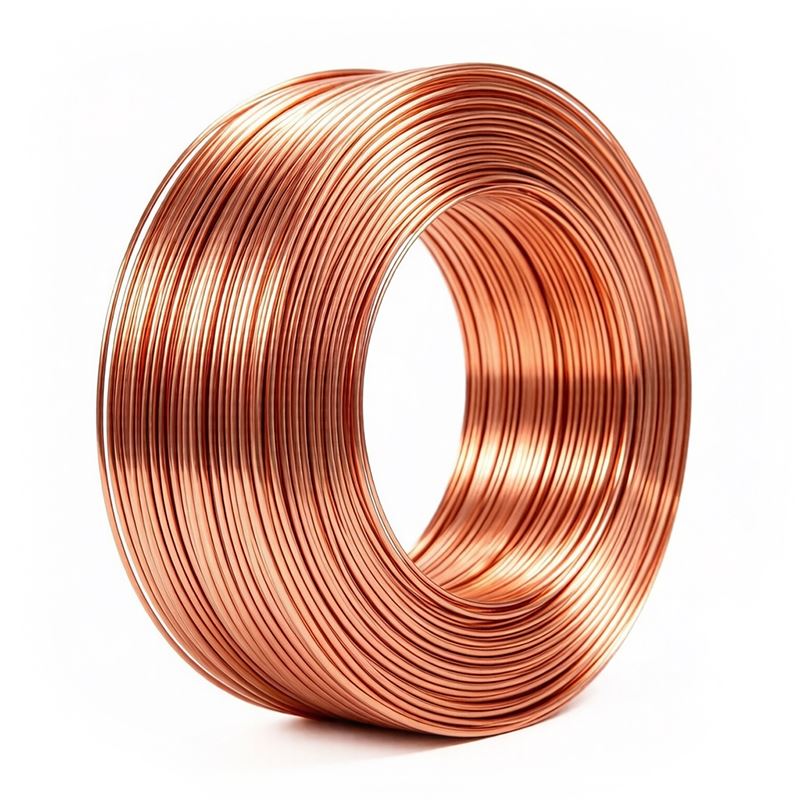
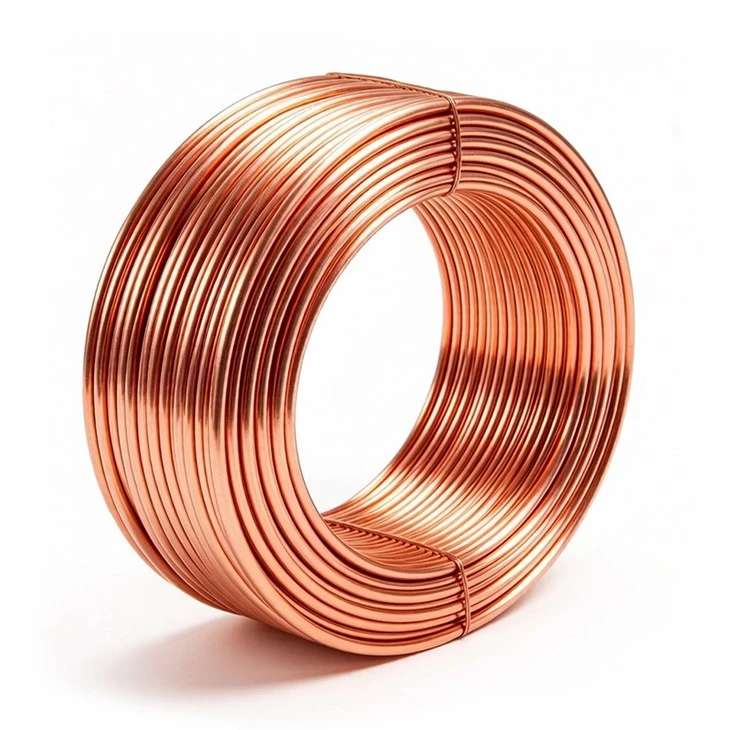
The mass - production capabilities of continuous casting technology also contribute to the cost - effectiveness of continuous cast copper rod. Large quantities of high - quality copper rods can be produced in a relatively short time, reducing the overall production cost. The Copper Rod Coil [/copper - wire - rod/copper - rod - coil.html] is a popular product for telecommunications applications because it can be easily transported and processed, further reducing the cost of the end - product.
Contact for Purchase
If you're in the telecommunications industry and looking for high - quality continuous cast copper rod, you've come to the right place. As a supplier, I offer a wide range of continuous cast copper rod products, each designed to meet the specific needs of your telecommunications projects. Whether you need rods for electrical conductivity, structural support, grounding, shielding, or high - frequency transmission, I can provide the right solution.
If you're interested in purchasing our Continuous Cast Copper Rod [/copper - wire - rod/continuous - cast - copper - rod.html], please reach out to start a discussion. I'm always ready to help you find the best copper rod product for your business.
References
- "Telecommunications Engineering Handbook", John Wiley & Sons
- "Copper Technology in Electrical and Electronics Applications", Elsevier
- Industry reports from leading telecommunications research institutions