

Hey there! As a supplier of Two Piece Connecting Rod, I've been getting a lot of questions lately about the lubrication requirements for these rods. So, I thought I'd put together a blog post to share everything you need to know.
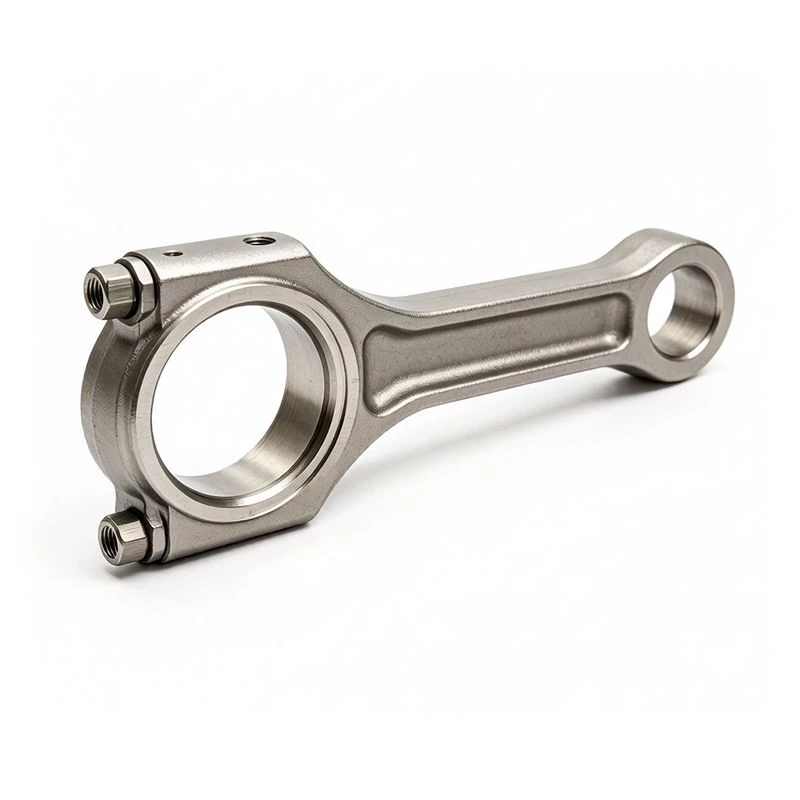
Let's start with the basics. A two piece connecting rod is a crucial component in an engine. It connects the piston to the crankshaft, transferring the reciprocating motion of the piston into the rotational motion of the crankshaft. This constant movement generates a lot of heat and friction, which is where proper lubrication comes in.
Why Lubrication is Crucial
Lubrication serves several important functions in a two piece connecting rod system. Firstly, it reduces friction between the moving parts. When two surfaces rub against each other, friction is created, which not only wears down the parts but also generates heat. Excessive heat can lead to thermal expansion, which can cause the parts to warp or even seize up. A good lubricant acts as a barrier between the surfaces, allowing them to slide over each other smoothly and reducing both friction and wear.
Secondly, lubrication helps to dissipate heat. As mentioned earlier, the movement of the connecting rod generates a significant amount of heat. The lubricant absorbs this heat and carries it away, preventing the parts from overheating. This is especially important in high-performance engines, where the operating temperatures can be extremely high.
Thirdly, lubrication protects the connecting rod from corrosion. Engine oil contains additives that form a protective film on the metal surfaces, preventing them from coming into contact with oxygen and moisture, which can cause rust and corrosion.
Types of Lubricants
There are several types of lubricants available for use in two piece connecting rods, each with its own set of properties and advantages.
Mineral Oil
Mineral oil is the most basic type of lubricant. It is derived from crude oil and is relatively inexpensive. Mineral oil provides good lubrication and heat dissipation, but it may not offer the same level of protection as synthetic oils. It also has a lower viscosity index, which means that its viscosity changes more significantly with temperature. This can make it less suitable for use in extreme temperature conditions.
Synthetic Oil
Synthetic oil is a man-made lubricant that is designed to offer superior performance compared to mineral oil. It has a higher viscosity index, which means that its viscosity remains more stable over a wide range of temperatures. This makes it ideal for use in high-performance engines and in extreme temperature conditions. Synthetic oil also provides better protection against wear and corrosion, and it can last longer than mineral oil.
Semi-Synthetic Oil
Semi-synthetic oil is a blend of mineral oil and synthetic oil. It offers a good balance between performance and cost. Semi-synthetic oil provides better lubrication and heat dissipation than mineral oil, and it also offers some of the benefits of synthetic oil, such as better wear protection and a more stable viscosity.
Lubrication Requirements
The lubrication requirements for a two piece connecting rod depend on several factors, including the type of engine, the operating conditions, and the design of the connecting rod.
Viscosity
Viscosity is one of the most important properties of a lubricant. It refers to the thickness or resistance to flow of the oil. The viscosity of the lubricant should be chosen based on the operating temperature of the engine. In general, a higher viscosity oil is recommended for use in high-temperature conditions, while a lower viscosity oil is suitable for use in low-temperature conditions.
Additives
Lubricants often contain additives to enhance their performance. These additives can include anti-wear agents, detergents, dispersants, and antioxidants. Anti-wear agents help to reduce friction and wear between the moving parts, while detergents and dispersants help to keep the engine clean by preventing the formation of sludge and deposits. Antioxidants help to prevent the oil from oxidizing and breaking down, which can reduce its effectiveness.
Oil Change Intervals
Regular oil changes are essential to maintain the proper lubrication of the two piece connecting rod. Over time, the oil can become contaminated with dirt, debris, and metal particles, which can reduce its effectiveness. The oil change interval will depend on the type of engine, the operating conditions, and the type of oil used. In general, it is recommended to change the oil every 3,000 to 5,000 miles for normal driving conditions, and more frequently for severe driving conditions.
Our Product Range
As a supplier of Two Piece Connecting Rod, we also offer a wide range of other connecting rods, including Copper Conductive Rod for Ring Main Unit, Titanium Connecting Rods, Oem Connecting Rods, and Forged H Beam Connecting Rods. Our products are made from high-quality materials and are designed to meet the highest standards of performance and reliability.
Get in Touch
If you're in the market for two piece connecting rods or any other type of connecting rod, we'd love to hear from you. Whether you're a small engine builder or a large automotive manufacturer, we can provide you with the products and support you need. Just reach out to us, and we'll be happy to discuss your requirements and provide you with a quote. Let's start a conversation about how we can help you get the best connecting rods for your applications.
References
- Automotive Lubrication Manuals
- Connecting Rod Manufacturer Technical Guides
- Engine Performance and Lubrication Research Papers