

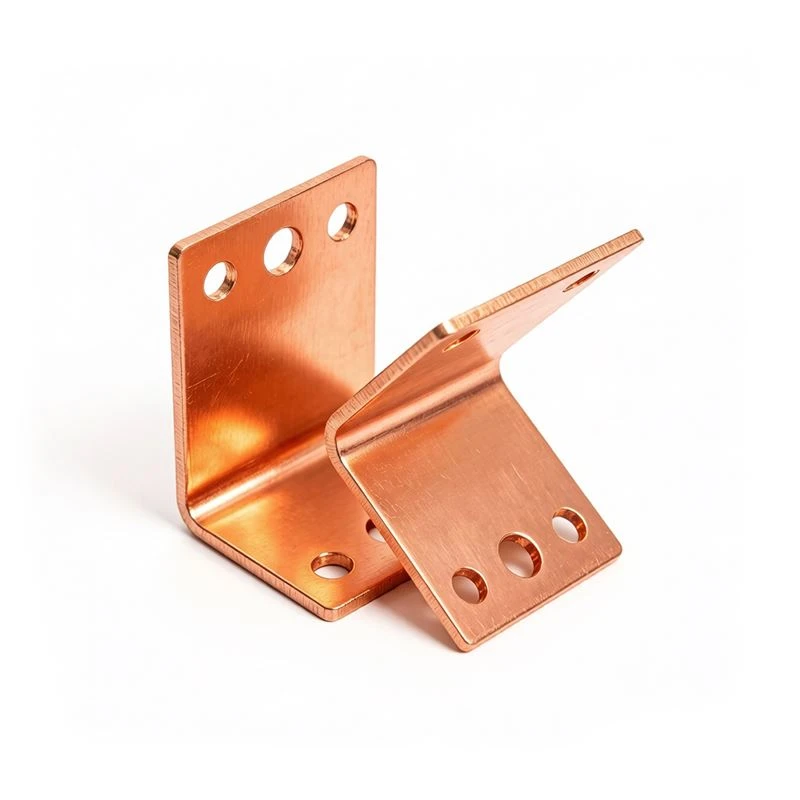
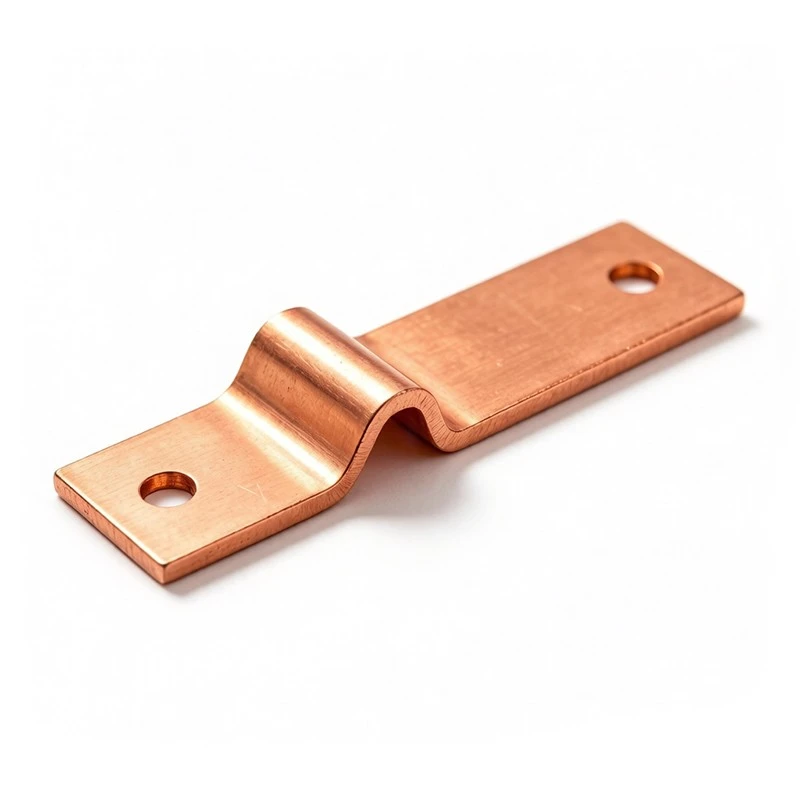
Custom Angles for Specific Installation Needs
Our bent copper busbar goes through a bending machine to achieve precise angles. You provide the drawings. We bend to your exact specifications. The most common request is a 90-degree angle. But we also do U-shapes and Z-shapes for more complex layouts. The bending process requires careful attention to one critical factor. Springback. Copper springs back slightly after bending. The amount of springback depends on thickness and bend angle. Our workers set compensation angles based on experience. They know how much extra angle to add. This ensures the final product matches your drawing exactly. The result is a busbar that fits perfectly in your installation.
Springback Compensation and Quality Control
Our team has developed a practical method for springback control. They start with a test piece for every new configuration. The test piece confirms the compensation angle. If the test piece matches the drawing, they proceed with production. If not, they adjust the compensation. This prevents errors in the final product. We check every piece with an angle gauge after bending. The angle must match the drawing within tolerance. We also check for surface cracks at the bend. Cracks indicate the bend radius was too tight. Our workers know the minimum bend radius for each thickness. They never exceed these limits. The result is a busbar that installs easily and performs reliably.
Custom Specifications
Bent copper busbar follows your custom drawings for size and bend angle. The material is T2 copper. Production follows GB/T5585.1-2026. Copper purity reaches Cu≥99.90%. Total impurities stay below 0.10%. Conductivity is ≥97.3% IACS. Resistivity at 20°C stays ≤0.0177 Ω·mm²/m. Density is 8.9 g/cm³. Tensile strength ranges from 220 to 260 MPa. Yield strength exceeds 170 MPa. Hardness is 65 to 90 HV. Elongation is 17% or higher.
Where Bent Busbars Are Used
Bent copper busbar appears in many electrical installations. Distribution cabinets use them for directional changes. Switchgear assemblies need them to route around obstacles. Power panels often have limited space. Bent busbars help fit the conductors into tight areas. The product also works well for connections that change elevation. A simple Z-bend can shift the busbar up or down. This helps align with different terminal heights. Our customers include panel builders and equipment manufacturers. They value the precision of our bending work. Export orders continue to grow as more customers discover our capabilities. We ship bent busbars to customers worldwide.
Order and Production Information
We start production after receiving your drawings. The design review ensures we understand the requirements. We deliver custom orders within one to two weeks. The minimum order is 1000 kilograms. Mixed specifications are allowed in one order. Third-party inspection is welcome. We accept USD, EUR, and CNY.
Technical Parameters
|
Parameter |
Value |
|
Material Grade |
T2 Copper |
|
Copper Purity |
Cu≥99.90% |
|
Standard |
GB/T5585.1-2026 |
|
Electrical Conductivity |
≥97.3% IACS |
|
Resistivity (20°C) |
≤0.0177 Ω·mm²/m |
|
Density |
8.9 g/cm³ |
|
Tensile Strength |
220–260 MPa |
|
Yield Strength |
≥170 MPa |
|
Hardness |
65–90 HV |
|
Elongation |
≥17% |
|
Specifications |
Custom per customer drawings |
|
Custom Lead Time |
1–2 weeks |
Hot Tags: bent copper busbar, China bent copper busbar manufacturers, suppliers, factory


