

In the realm of electrical engineering, copper busbars are indispensable components, serving as the backbone for efficient power distribution. They are renowned for their excellent electrical conductivity and thermal properties. As a supplier of Bent Copper Busbar, I've witnessed firsthand the diverse applications and unique requirements of these bent copper conductors. One question that often arises in technical discussions and customer inquiries is how bending affects the heat dissipation of a copper busbar. In this blog, we'll explore this topic in detail, combining scientific principles with practical insights.
The Basics of Heat Dissipation in Copper Busbars
Before delving into the impact of bending, let's first understand the fundamental mechanisms of heat dissipation in copper busbars. When an electric current flows through a busbar, resistance in the material causes it to generate heat according to Joule's law ((Q = I^{2}Rt), where (Q) is the heat generated, (I) is the current, (R) is the resistance, and (t) is the time). This heat needs to be dissipated to prevent the busbar from overheating, which can lead to reduced conductivity, insulation damage, and potential system failures.
There are three main modes of heat dissipation: conduction, convection, and radiation. Conduction is the transfer of heat through the material itself, from regions of higher temperature to lower temperature. In a copper busbar, heat is conducted along the length of the bar and into the surrounding components or supports. Convection involves the transfer of heat to the surrounding fluid (usually air) through the movement of the fluid. As the air near the hot busbar heats up, it rises, creating a natural convection current that carries away the heat. Radiation is the emission of electromagnetic waves from the surface of the busbar, which transfers heat to the surrounding environment.
How Bending Alters the Geometry and Thermal Properties
Bending a copper busbar changes its geometry, which in turn affects its thermal properties. One of the most significant changes is the increase in surface area. When a busbar is bent, additional surface area is exposed to the surrounding environment, which can enhance heat dissipation through convection and radiation. For example, a Z Shaped Copper Busbar or a U Shaped Copper Busbar has more surface area compared to a straight busbar of the same length and cross - section. This increased surface area provides more opportunities for heat to be transferred to the surrounding air.
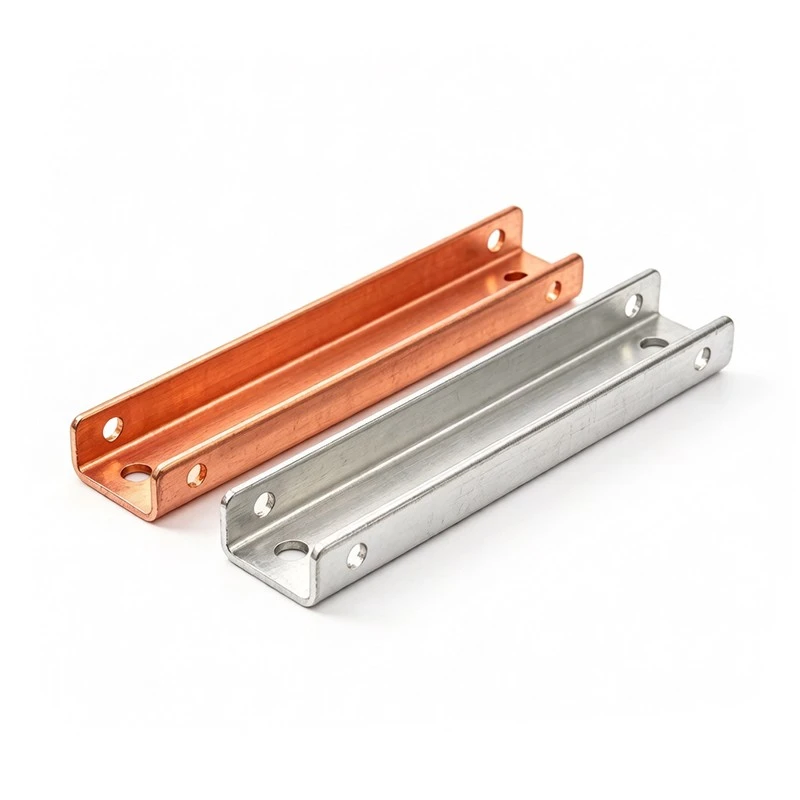
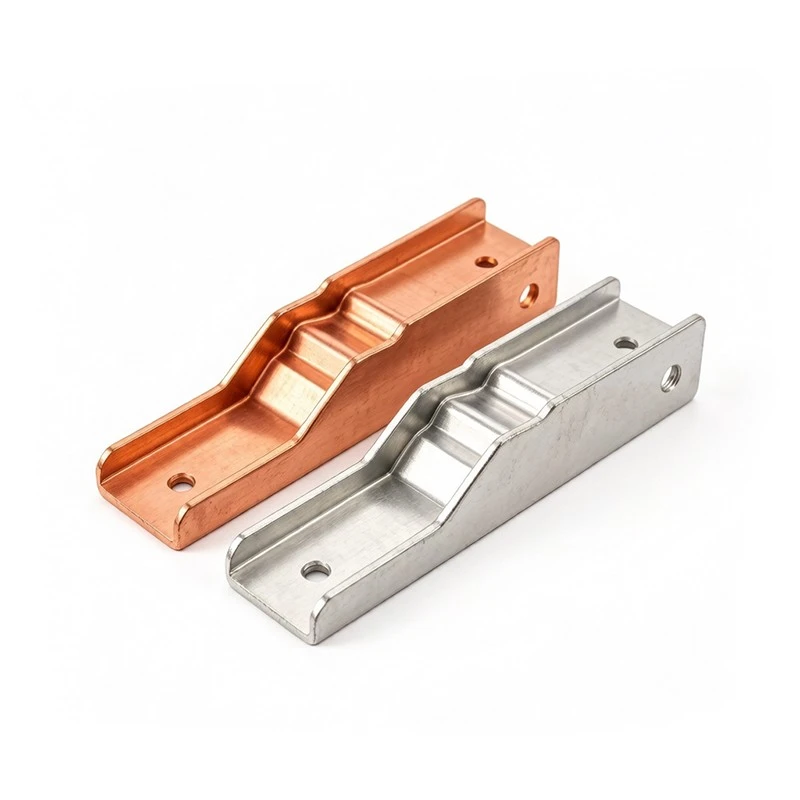
However, bending can also introduce some challenges. The bending process may cause changes in the internal structure of the copper, which can affect its electrical conductivity and, consequently, its heat generation. If the bending process is not carefully controlled, it can lead to work hardening, where the material becomes harder and more brittle. Work - hardened copper has higher electrical resistance, which means more heat is generated for a given current.
Impact on Conduction
Conduction within a bent copper busbar is influenced by the path of the current and the integrity of the material. In a straight busbar, the current flows uniformly along the length of the bar, and heat is conducted in a relatively straightforward manner. When the busbar is bent, the current path becomes more complex. At the bend, the current may be concentrated in certain areas, leading to non - uniform heat distribution. This can create hotspots, where the temperature is significantly higher than in other parts of the busbar.
The quality of the bend is also crucial for conduction. A well - made bend with smooth transitions will have less impact on conduction compared to a sharp, distorted bend. In a poorly bent busbar, the internal crystal structure of the copper may be disrupted, increasing the resistance and impeding the flow of heat through conduction.
Influence on Convection
Convection is highly dependent on the surface area and the flow of air around the busbar. As mentioned earlier, bending can increase the surface area, which is beneficial for convection. Additionally, the shape of the bend can affect the air flow patterns. For instance, a Step Copper Busbar with multiple steps can create turbulence in the air flow around it. Turbulent air flow has a higher heat transfer coefficient compared to laminar flow, which means more heat can be carried away from the busbar.
On the other hand, if the bends are too close together or if the busbar is bent in a way that restricts the air flow, it can reduce the effectiveness of convection. For example, a tightly coiled busbar may trap the hot air near the surface, preventing fresh, cool air from coming into contact with the busbar and reducing the heat transfer rate.
Effect on Radiation
Radiation heat transfer is proportional to the surface area and the emissivity of the material. Bending the busbar to increase the surface area also increases the amount of heat that can be radiated. However, the emissivity of copper is relatively low, which means that radiation is not the dominant mode of heat dissipation for copper busbars compared to conduction and convection. Nevertheless, any increase in surface area due to bending can still contribute to a small but noticeable improvement in overall heat dissipation through radiation.
Practical Considerations for Design and Application
When designing electrical systems that use bent copper busbars, engineers need to take into account the impact of bending on heat dissipation. Here are some practical considerations:
- Bend Radius: A larger bend radius generally results in less stress on the copper and a more uniform current distribution, which is beneficial for heat dissipation. It also helps to minimize the risk of work hardening.
- Surface Treatment: Applying a surface treatment to the busbar, such as anodizing or coating, can increase its emissivity and enhance heat dissipation through radiation.
- Air Flow Design: In the overall electrical enclosure design, provisions should be made to ensure adequate air flow around the bent busbars. This may include the use of fans, vents, or strategic placement of the busbars to promote natural convection.
- Temperature Monitoring: Installing temperature sensors on the busbars allows for real - time monitoring of the temperature. This can help detect hotspots early and take corrective actions to prevent overheating.
Our Role as a Bent Copper Busbar Supplier
As a supplier of Bent Copper Busbar, we play a crucial role in ensuring that our products meet the highest standards for heat dissipation. We use advanced manufacturing techniques to control the bending process and minimize the impact on the electrical and thermal properties of the copper. Our quality control team conducts rigorous testing to ensure that each busbar has the correct dimensions, uniform conductivity, and proper surface finish.
We also work closely with our customers to understand their specific requirements and provide customized solutions. Whether it's a Z Shaped Copper Busbar for a compact electrical cabinet or a L Shaped Copper Busbar for a high - power distribution system, we have the expertise to design and manufacture the right product.
Conclusion and Call to Action
In conclusion, bending a copper busbar has both positive and negative effects on heat dissipation. While it can increase the surface area and enhance convection and radiation, it can also introduce challenges such as non - uniform current distribution and potential work hardening. By understanding these mechanisms and taking appropriate design and manufacturing measures, we can optimize the heat dissipation performance of bent copper busbars.
If you're in the process of designing an electrical system or need reliable bent copper busbars for your project, we'd love to hear from you. Our team of experts is ready to assist you in selecting the right busbar shape, size, and specifications to meet your heat dissipation requirements. Contact us today to start a discussion about your procurement needs.
References
- [1] Incropera, F. P., & DeWitt, D. P. (2002). Fundamentals of Heat and Mass Transfer. John Wiley & Sons.
- [2] Chapman, S. J. (2012). Electric Machinery Fundamentals. McGraw - Hill Education.
- [3] Fleischer, C., & Knezevic, R. (2014). "Thermal Analysis of Busbars in Low - Voltage Switchgear" in IEEE Transactions on Industry Applications.