

As a leading supplier of Aluminum Connecting Rods, I often encounter questions from customers about the properties of our products. One of the most frequently asked questions is about the thermal expansion coefficient of aluminum connecting rods. In this blog post, I will delve into the concept of the thermal expansion coefficient, its significance for aluminum connecting rods, and how it impacts the performance of engines.
Understanding the Thermal Expansion Coefficient
The thermal expansion coefficient is a fundamental property of materials that describes how much a material expands or contracts when its temperature changes. It is defined as the fractional change in length or volume per degree change in temperature. In the case of linear thermal expansion, the coefficient is denoted as α (alpha) and is expressed in units of per degree Celsius (°C⁻¹) or per degree Kelvin (K⁻¹).
Mathematically, the linear expansion of a material can be calculated using the following formula:
ΔL = α * L₀ * ΔT
Where:
- ΔL is the change in length
- α is the linear thermal expansion coefficient
- L₀ is the original length of the material
- ΔT is the change in temperature
For example, if a rod made of a material with a thermal expansion coefficient of 20 x 10⁻⁶ °C⁻¹ and an initial length of 100 mm is heated by 50 °C, the change in length can be calculated as:
ΔL = (20 x 10⁻⁶ °C⁻¹) * 100 mm * 50 °C = 0.1 mm
Thermal Expansion Coefficient of Aluminum
Aluminum is a widely used metal in the automotive and aerospace industries due to its high strength-to-weight ratio, good corrosion resistance, and excellent thermal conductivity. The thermal expansion coefficient of aluminum varies depending on its alloy composition and heat treatment. However, the average linear thermal expansion coefficient of pure aluminum is approximately 23.1 x 10⁻⁶ °C⁻¹.
This relatively high thermal expansion coefficient compared to some other materials means that aluminum parts can experience significant dimensional changes when exposed to temperature variations. In the context of connecting rods, this can have both positive and negative implications for engine performance.
Importance of Thermal Expansion Coefficient for Aluminum Connecting Rods
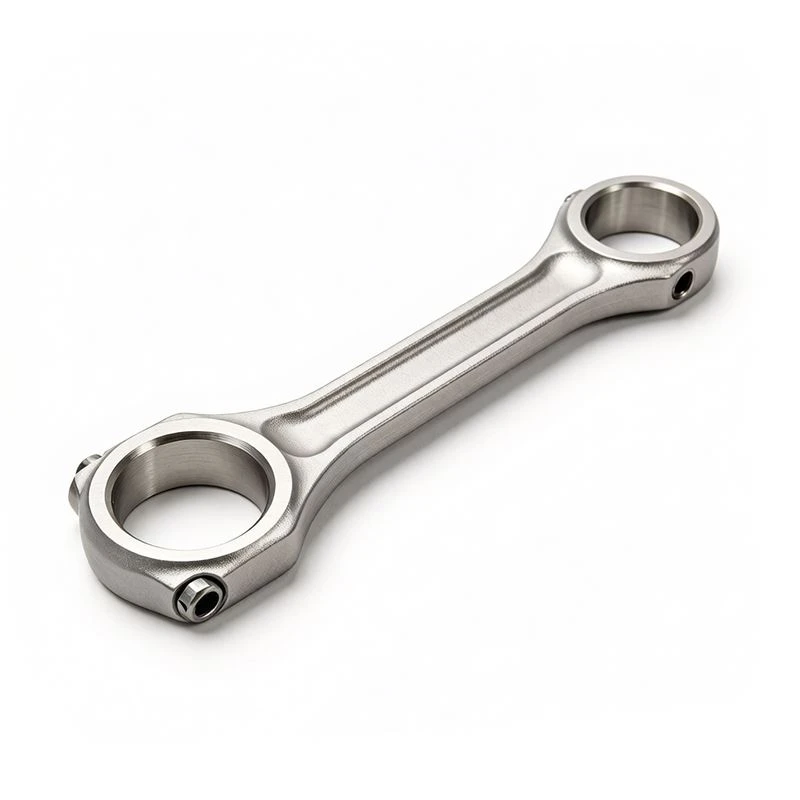
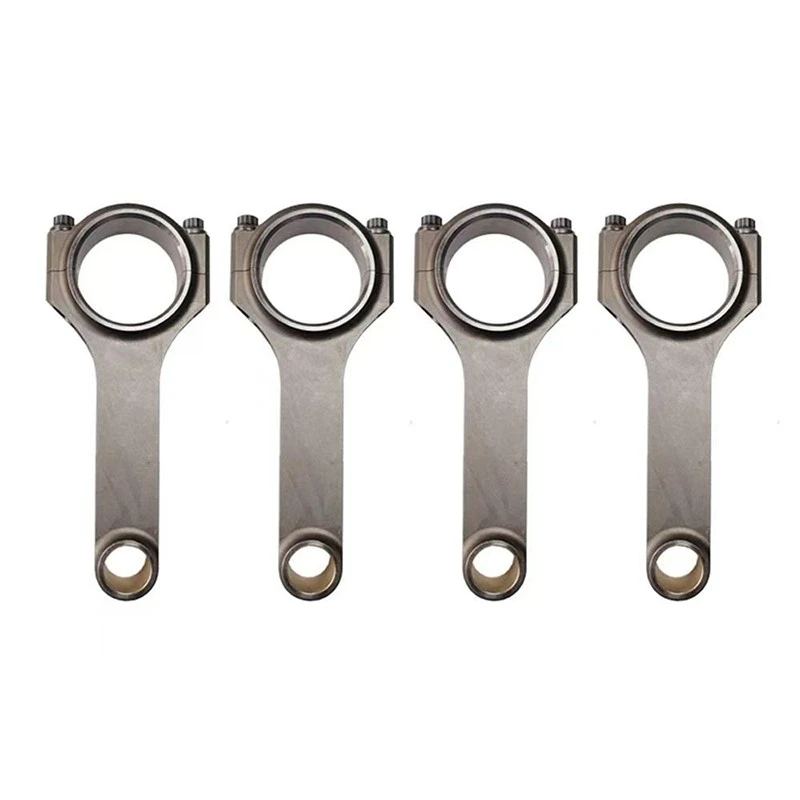
In an engine, connecting rods play a crucial role in transmitting the reciprocating motion of the pistons to the rotating motion of the crankshaft. They are subjected to high mechanical stresses and temperature variations during engine operation. The thermal expansion coefficient of the connecting rod material is an important factor to consider because it affects the following aspects:
Fit and Clearance
The connective rod must fit precisely within the engine block and the crankshaft. Any change in length due to thermal expansion can affect the clearance between the connecting rod and these components. If the clearance becomes too small, it can lead to excessive friction, wear, and even seizure of the engine. On the other hand, if the clearance is too large, it can result in increased noise, vibration, and reduced engine efficiency.
By selecting a material with an appropriate thermal expansion coefficient, engine designers can ensure that the connecting rod maintains the proper fit and clearance throughout the operating temperature range of the engine.
Material Integrity
Thermal expansion and contraction can induce internal stresses in the connecting rod. If these stresses exceed the material's yield strength, it can lead to permanent deformation or even failure of the connecting rod. Aluminum alloys with well-defined thermal expansion coefficients are carefully chosen to minimize the risk of such damage.
Performance and Efficiency
The thermal expansion properties of the connecting rod can also affect the overall performance and efficiency of the engine. For example, a connecting rod with a lower thermal expansion coefficient can help maintain a more consistent compression ratio as the engine heats up, leading to better combustion efficiency and power output.
Our Aluminum Connecting Rods and Thermal Expansion
At our company, we are committed to providing high-quality aluminum connecting rods that meet the strictest industry standards. We use advanced manufacturing processes and the latest alloys to ensure that our connecting rods have optimal thermal expansion properties.
Our Forged H Beam Connecting Rods are designed to offer excellent strength and durability while maintaining a low weight. The specific alloy composition used in these rods is carefully selected to provide a thermal expansion coefficient that is compatible with the engine's operating conditions.
In addition to our standard offerings, we also provide Titanium Connecting Rods and Racing Connecting Rods for high-performance applications. Titanium has a lower thermal expansion coefficient than aluminum, which can be beneficial in certain racing and high-stress environments.
We also offer specialized products such as Copper Conductive Rod for Ring Main Unit and Two Piece Connecting Rod, each designed with specific thermal and mechanical properties to meet the unique requirements of different applications.
Conclusion and Call to Action
Understanding the thermal expansion coefficient of aluminum connecting rods is essential for engine designers, manufacturers, and enthusiasts. By choosing the right material and design, it is possible to optimize engine performance, reliability, and efficiency.
As a trusted supplier of Aluminum Connecting Rods, we have the expertise and resources to provide you with the best solutions for your specific needs. Whether you are building a high-performance racing engine or a standard automotive engine, our products are designed to meet your expectations.
If you are interested in learning more about our Aluminum Connecting Rods or need assistance in selecting the right product for your application, please feel free to reach out to us for a consultation. We look forward to the opportunity to work with you and contribute to the success of your projects.
References
- "Materials Science and Engineering: An Introduction" by William D. Callister Jr. and David G. Rethwisch.
- "Automotive Engine Design" by Heinz Heisler.
- Industry standards and technical papers related to aluminum alloys and connecting rod design.